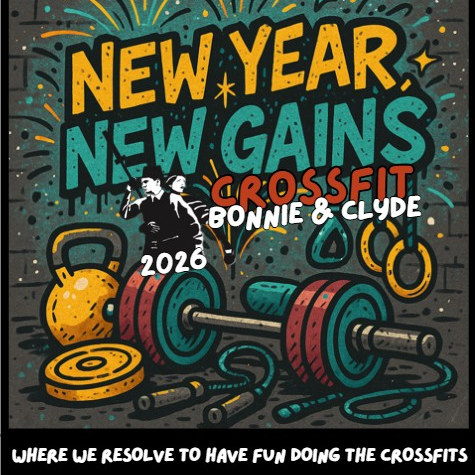
New Year, New Gains 2.0 - A Choose Your Own Adventure Competition
About This Competition
Entering into a New Year is about embracing fresh adventures, and at this event, competitors get to do just that! In this “Choose Your Own Adventure” competition, teams of 2 (MM, MF, FF) will be in control of their workout journey. Rather than a one-size-fits-all challenge, participants will experience an element of strategic choice in each of 4 WODS... SO CHOOSE WISELY TO WIN THE "PRIZE-LY".
And this year we are bringing a Raffle Ticket BONUS WOD!!
Source: Competition Corner
Your results are already here.
Every competition you've entered, ranked workout by workout. Search your name and find your entire history.
Search the ResultsThe conversation is already happening.
Athletes are commenting, posting photos, and reliving the workouts. Jump in.
See the CommunityReady for what's next?
Browse upcoming competitions near you — your next event is probably already listed.
Find Competitions Near MeHow much stronger are you than last year?
Log PRs for every lift and benchmark workout. Your progress tells the story — KettleBoards keeps track.
Track Your PRsDivisions
Top Results
Top 5 finishers per division. View full results →
| # | Athlete | Points |
|---|---|---|
| 1 | B’n’K | 5 |
| 2 | Fairly Odd Grandparents | 7 |
| # | Athlete | Points |
|---|---|---|
| 1 | Yippe Ki-Yay Motherthruster | 5 |
| 2 | SIC OG’s | 8 |
| 3 | Old Feral Dogs | 11 |
| # | Athlete | Points |
|---|---|---|
| 1 | Rising to the TOPO | 9 |
| 2 | Stimulants & Snatches | 13 |
| 3 | Booty and the Beast | 16 |
| 4 | Algebra & ACLs | 20 |
| 5 | Coffee & Couplets | 26 |
| # | Athlete | Points |
|---|---|---|
| 1 | Keep it Clean | 6 |
| 2 | Bench Press Every Day | 8 |
| 3 | Married and Unsupervised | 10 |
| # | Athlete | Points |
|---|---|---|
| 1 | Swoliosis | 8 |
| 2 | Alex² | 14 |
| 3 | OSHA Violations | 15 |
| 4 | Undecided | 16 |
| 5 | Barbell Cartel | 20 |
| # | Athlete | Points |
|---|---|---|
| 1 | Burpees and Bad Decisions | 10 |
| 2 | KettleBelles | 13 |
| 3 | Strong Like Bull | 13 |
| 4 | This Is In Fact Our First Rodeo | 15 |
| 5 | HOT mess exPRESS | 16 |
| # | Athlete | Points |
|---|---|---|
| 1 | Stronger Things | 7 |
| 2 | Insecure but here! | 8 |
| 3 | Two B's in a WOD | 12 |
| 4 | Stud Muffins | 14 |
| 5 | Buns and Guns | 19 |
| # | Athlete | Points |
|---|---|---|
| 1 | Burpees Strike Back | 4 |
| 2 | Snatch Daddies | 8 |
Workouts
Accumulate the longest DEAD HANG time as a team.
It’s just that simple!
· Any grip permitted
· Can regrip as many times as necessary
· Can only chalk up once at the start of the WOD
NO GRIPS, NO WAX… Just chalk and your fingies!
Scoring: P1 dead hang time + P2 dead hang time = TOTAL
1st place team of each division = 10 extra RAFFLE tix
2nd place team of each division = 8 extra RAFFLE tix
AND SO ON...
Raffling:
- Pink 35# Rogue Bella Barbell
- Red Yeti Cooler full of goodies
Don't Be A Chicken!
AMRAP 10min:
P1 flings chickens into different buckets at different distances away for points while P2 does:
1 round of:
- 8 DB Front Rack lunges OR DB Renegade Row Push-ups
- 8 DB Box Step Overs OR Burpee Box Jumps
- 8 DB Squat Cleans OR DB Thrusters
Successful and unsuccessful chickens in buckets and on floor can be retrieved if a partner uses up all their chickens but still has time left to return to “fling line” and keep trying.
Scoring: Total reps completed + total points earned for successful chickens in buckets (3pt bucket closer & 5pt bucket further away - distance to remain disclosed for excitement purposes) = TOTAL points earned
Weights:
New Year (Scaled & Masters):
- F/F = 25# DBs, 16” box
- M/M = 35# DBs, 20” box
- M/F = 25/35# DBs,16/20” box
(M/F each use respective weights when it is your turn)
New Gains (RX):
- F/F = 35# DBs, 20” box
- M/M = 50# DBs, 24” box
- M/F = 35/50# DBs, 20/24” box
(M/F each use respective weights when it is your turn)
Movement Standards
Dumbbell Front Rack Lunges
1. Starting Position:
Dumbbell Placement: Hold one dumbbell in each hand in the front rack position, resting the heads of the dumbbells lightly on the shoulders or keeping elbows slightly forward to support the load.
Chest Up: Maintain an upright torso, keeping the chest lifted and core braced.
Feet Under Hips: Stand tall with feet hip-width apart before initiating the first step.
2. The Step and Descent:
Forward or Reverse: Lunges may be performed stepping forward, backward.
Knee Alignment: The front knee should track in line with the toes and should not collapse inward.
Hip/Knee Angle: Lower until the back knee clearly touches the ground (light touch—no crashing).
3. Bottom Position:
Back Knee Touch: For the rep to count, the back knee must make contact with the floor under control.
Torso Upright: Chest stays up with dumbbells still in secure front rack position—no resting on shoulders with hand handles.
4. The Ascent (Returning to Stand):
Drive Through Front Heel: Push through the front foot to stand tall.
Full Extension: At the top, the athlete must reach full hip and knee extension before initiating the next step.
Front Rack Maintained: Dumbbells must stay in the front rack through the entire movement.
5. Reps and Range of Motion Standards:
Full Reps: A valid rep requires back knee touch, upright torso, dumbbells in front rack, and full extension at the top.
Dumbbell Renegade Row
1. Starting Position: Plank Setup: Begin in a strong plank position with one hand on each dumbbell, wrists stacked under shoulders.
Feet Placement: Feet should be set wider than shoulder-width to create a stable base and prevent excessive hip rotation.
Body Line: Keep your body in a straight line from head to heels—no sagging hips or piking.
2. Initiating the Row: Weight Transfer: Shift your weight slightly into the non-rowing arm while maintaining square hips.
Pull Path: Row one dumbbell by pulling your elbow straight back toward your hip.
Shoulder Stability: Keep the shoulder blade pulled down and back; avoid shrugging.
3. Row Standard: Range of Motion: The rowing arm should achieve parallel with side of your torso or ribcage to count the rep. Hip Control: Hips must remain level—excessive rotation or opening of the torso is a "no rep."
4. Push-up: After completion of both arms rowing, athlete will perform a push-up by lowering chest until it touches or clearly reaches the plane of the dumbbells. Elbows should track back at a roughly 45° angle.
Full Lockout: Press back up to a strong plank with elbows fully extended before initiating any rowing motion
5. Returning to Plank: Controlled Lowering: Lower the dumbbell back to the floor under control; do not drop or slam.
Stability: Maintain plank tension—glutes squeezed, abs braced.
6. Alternating Reps: Rep Sequence: After one complete row on one arm, you must return to a stable plank before rowing the opposite arm.
Even Effort: Each side must perform an equal number of reps unless the workout states otherwise.
7. Full Rep Requirements:
A rep counts when: The athlete starts and finishes in a solid plank.
The rowed dumbbell arm elbow reaches parallel with the body.
Hips stay level without twisting or shifting excessively.
Both dumbbells remain under the athlete’s hands at all times. A successful push up rep is performed after both arms have rowed.
Dumbbell Box Step-Over
1. Starting Position: Dumbbell Hold: Athlete will old two dumbbells, one in each hand. Dumbbells may be held: At the sides (farmer carry), In the front rack, On the shoulders.
Box Placement:
Stand facing the box with both feet flat on the ground. Box height must match the prescribed height for the workout.
2. The Step Up: Foot Contact: One entire foot must make clear contact with the top of the box before transferring weight. Neutral Torso: Maintain control and avoid excessive leaning or rounding of the back. Dumbbells must remain in the designated hold throughout the movement.
3. Crossing the Box: Both Feet on the Box: Before stepping down, both feet must clearly touch the top of the box — no jumping completely over without contact. Control: Athlete must demonstrate balance and control while stepping across. No running or bounding over the box.
4. The Step Down: Full Ground Contact: Step off the opposite side of the box (not returning to the original side). At least one foot must touch the ground before the other. No Jumping Off:
Jumping off the top of the box or intentionally dropping down with both feet at once is NOT allowed. Each rep must finish with full control.
5. Top/Bottom Position Requirements: A rep starts with: Both feet on the ground on one side of the box, Dumbbells held properly, Athlete facing the box, A rep ends when: Both feet touch the ground fully on the other side of the box, Dumbbells remain in control, The athlete has fully cleared the box
6. Reps and Range of Motion: Full Rep = Start on one side → Step onto box with control → Both feet touch the top → Step down on the opposite side → Athlete stands fully on the other side.
Burpee Box Jump
1. Starting Position: Feet Under Hips: Stand tall with feet about hip-width apart, facing the box. Neutral Posture: Keep your chest up, arms relaxed at your sides, and core lightly braced.
2. The Burpee Descent: Hands to Floor: Lower your body by hinging at the hips and bending the knees, placing both hands flat on the floor directly under the shoulders. Jump both feet back into a strong plank position with a straight line from head to heels.
3. The Bottom Position (Chest to Floor): Chest Touch: Lower your chest and thighs to the ground simultaneously. Chest must make clear contact with the floor for the rep to count.
4. The Return to Standing: Jump or Step In: Bring both feet forward toward the hands (jump or step allowed). Stand Tall: You must come to a fully upright position before initiating the jump to the box. Hips and knees must reach full extension.
5. The Box Jump: Two-Foot Takeoff: Jump onto the box using a clear two-foot takeoff (no stepping up). Controlled Landing: Land with both feet on top of the box, showing balance and control.
6. Top Position on the Box: Full Extension: Stand tall on the box with hips and knees fully extended.
7. Dismount: Any Method Allowed: You may step down or jump down safely. The rep officially ends once both feet touch the ground on the other side of the box.
8. Reps and Range of Motion: One Full Rep =
Burpee (chest to floor) → Stand fully → Two-foot jump onto box → Full stand on box → Dismount.
Dumbbell Squat Clean
1. Starting Position: Dumbbells begin on the ground outside the athlete’s feet. Feet are approximately hip-width apart. Chest up, back flat, eyes forward or slightly down, core braced.
2. The Pull from the Floor: Initiate movement by extending the hips and knees together to lift the dumbbells from the floor.
3. The Catch (Front Rack Position): The dumbbells are received in the front rack position in one continuous movement.
Front Rack: Dumbbell rests on the shoulder with the head of the dumbbell clearly above the shoulders.
Elbow Position: Elbow may be in front or slightly to the side of the body, but the dumbbell must be supported on the shoulder.
4. The Squat: Full Depth: The athlete must reach full squat depth, with the hip crease clearly below the top of the knees.
Heels Down: Heels remain in contact with the floor at the bottom of the squat as best as possible. The dumbbells remains supported on the shoulder throughout the squat.
5. The Stand: Full Extension: Stand up from the squat until hips and knees are fully extended. Stable Finish: Athlete must show control at the top before initiating the next rep.
6. Reps and Range of Motion: One Full Rep =
Dumbbell on floor → Clean to shoulder → Full squat (hip crease below knees) → Stand fully with hips and knees extended.
Dumbbell Thruster
1. Starting Position: Dumbbells on the Floor and then Dumbbells may be cleaned into the front rack position, resting on the shoulders. Feet are approximately shoulder-width apart. Chest up, core braced, eyes forward.
2. The Squat Descent: Initiate the Squat: Lower the body by bending the hips and knees together. Controlled Descent: Maintain an upright torso with dumbbells supported on the shoulders. Heels Down: Heels stay in contact with the floor throughout the squat as best as possible.
3. The Bottom Position: Full Depth: Hip crease must clearly pass below the top of the knees. Dumbbells Stable: Dumbbells remain in contact with the shoulders at the bottom of the squat.
4. The Drive: Explosive Stand: Drive up powerfully from the bottom of the squat using the legs. Single Continuous Motion: The squat and press must be one fluid movement — no pause at the top of the squat.
5. The Press: Arms Extend Overhead: As the hips and knees reach full extension, the dumbbells are pressed overhead. Lockout Required: Elbows must fully lock out with dumbbells directly over or slightly behind the midline of the body. Head Through: The head comes through the arms at the top.
6. Top Position: Full Extension: Hips, knees, and elbows are fully extended. Stable Finish: Athlete must show control overhead before starting the next rep.
7. Lowering the Dumbbells: Under Control: Dumbbells must be returned to the shoulders under control. No Dropping: Dumbbells may not be dropped directly from overhead unless specified in the workout.
8. Reps and Range of Motion: One Full Rep = Dumbbells on shoulders → Full squat (hip crease below knees) → Continuous drive → Dumbbells locked out overhead with hips and knees fully extended.
We will show the requested way to fling chickens on comp. day! We can declare there will be NO underhand throwing or tossing of chickens... they must be "flung" using the finger pull methods :)
Grip, Rep, Repeat!
Stations (10min workout):
You and your partner will have FOUR 2-min stations:
Bench, Deadlift, Thruster, Burpees – YOU CHOOSE YOUR WEIGHTS on your barbell. You may change weights per partner within each of your 2min windows but it will eat away at your time!
- Weight x Reps = Total
Non-working partner always has to hold crab pinch grip plates
If holding partner breaks – working partner has to stop
You will have a 1min transition window to change weights for the next movement accordingly EXCEPT there will be NO 1 min transition between thrusters and burpees :)
New Year Plates: 10/15#
New Gains Plates: 15/25#
Scoring: Weight x Reps per each 2min window + total partner burpees = TOTAL
Bench Press
1. Starting Position: Athlete lies flat on the bench with head, upper back, and glutes in contact with the bench.
Feet Planted: Both feet are flat on the floor with no movement during the lift. Grip: Hands grasp the barbell with a closed grip (thumbs wrapped), grip width of choice unless otherwise specified.
Rack Position: Barbell starts in the rack.
2. Unrack: Controlled Lift-Off: Bar is unracked and moved to a position directly over the shoulders. Stable Start: Athlete establishes control with elbows locked out before beginning the descent.
3. The Descent: Lower Under Control: Barbell is lowered in a controlled manner. Touch Point: The bar must make clear contact with the chest or upper torso (sternum area). No Bounce: The bar may not be bounced off the chest to the best of your ability taking into account the speed at which you are trying to work.
4. The Bottom Position: Control: Bar shows clear control and a clear touch on the chest. Body Contact Maintained: Head, shoulders, and glutes must remain in contact with the bench.
5. The Press: Press to Lockout: Athlete presses the barbell upward using the chest, shoulders, and triceps. Straight Bar Path: Bar travels upward to a stable lockout over the shoulders. No Hip Lift: Glutes must remain in contact with the bench throughout the press.
6. Top Position: Full Lockout: Elbows fully extended.
Control Shown: Athlete demonstrates balance and control at the top of the rep.
7. Rerack: Controlled Return: Once partner 1 is finished his/her bench session, Bar is returned to the rack safely and controlled.
SPOTTERS: You will be provided a 2nd judge as a spotter for your bench :)
8. Reps and Range of Motion
One Full Rep = Bar unracked → Controlled descent → Bar touches chest → Press to full elbow lockout with head, shoulders, and glutes on bench.
Common No-Reps
- Bar does not touch the chest
- Elbows not fully locked out
- Hips/glutes lift off the bench
- Bouncing the bar off the chest
- Feet leaving the floor
Deadlift
1. Starting Position: Barbell starts on the ground over the mid-foot.
Feet Under Hips: Feet are approximately hip-width apart, toes slightly turned out. Grip: Hands grasp the bar just outside the legs using a closed grip (mixed, hook, or double overhand allowed unless otherwise specified). Neutral Spine: Chest up, back flat, shoulders slightly in front of the bar, core braced. Arms Long: Arms remain straight throughout the lift.
2. The Pull: Begin the lift by driving through the heels and extending the knees and hips together. Bar Path: Bar stays close to the shins and thighs throughout the lift. Controlled Movement: No jerking or bouncing the bar off the floor.
3. The Stand (Top Position)
Full Extension: Athlete stands tall with hips and knees fully extended.
Shoulders Back: Shoulders slightly behind the bar (no excessive lean).
4. Lockout: Bar Under Control: Bar remains held at the top with control.
Complete Rep: Hips and knees must reach full extension simultaneously.
5. The Descent
Controlled Lowering: Bar is lowered under control by hinging at the hips first, then bending the knees. Return to Floor: Barbell returns fully to the floor before beginning the next rep. Touch-and-go reps are permitted.
6. Reps and Range of Motion: One Full Rep =
Barbell on floor → Lift to full hip and knee extension → Bar returned under control to the floor.
Common No-Reps
- Hips not fully extended at the top
- Knees locked but hips short of extension
- Bar not returning fully to the floor
- Bouncing or rebounding the bar
Thruster (Barbell)
1. Starting Position: Bar begins on floor and is cleaned into the front rack position, resting on the shoulders. Elbows Forward: Elbows are in front of the bar, allowing it to rest securely on the shoulders.
Feet Under Hips: Feet are approximately shoulder-width apart.
Neutral Posture: Chest up, core braced, eyes forward.
2. The Squat Descent: Initiate the Squat: Lower the body by bending the hips and knees together. Upright Torso: Maintain a tall chest with the bar supported on the shoulders. Heels Down: Heels stay in contact with the floor throughout the squat.
3. The Bottom Position: Full Depth: Hip crease must clearly pass below the top of the knees. Bar Stable: Bar remains in contact with the shoulders at the bottom of the squat.
4. The Drive: Explosive Stand: Drive upward out of the squat using the legs. Single Continuous Motion: The squat and press must be one fluid movement with no pause at the top of the squat.
5. The Press: Bar Moves Overhead: As the hips and knees reach full extension, the barbell is pressed overhead.
Lockout Required: Elbows fully extend with the bar directly over or slightly behind the midline of the body.
Head Through: Head passes through the arms at the top.
6. Top Position: Full Extension: Hips, knees, and elbows are fully locked out. Control Shown: Athlete demonstrates balance and control before beginning the next rep.
7. Lowering the Bar: Controlled Descent: Bar is lowered under control back to the front rack position. No Dropping: Bar may not be dropped from overhead unless explicitly allowed.
8. Reps and Range of Motion: One Full Rep =
Bar in front rack → Full squat (hip crease below knees) → Continuous drive → Bar locked out overhead with hips and knees fully extended.
Common No-Reps
- Squat depth not reached
- Pressing the bar before standing (press-out early)
- Elbows not locked out overhead
- Hips or knees short of full extension
- Pausing between the squat and press
Partner Over-Partner Burpees
1. Starting Position: Partners standing side-by-side.
2. The Burpee Descent: Hands to Floor: Athlete A lays on the ground, Athlete B lowers by hinging at the hips and bending the knees, placing hands flat on the floor under the shoulders. Feet Back: Jump or step both feet back into a strong plank position.
3. Bottom Position (Chest to Floor): Chest and Thighs Touch: Athlete B lowers chest and thighs to the floor simultaneously.
Clear Contact: Chest must make visible contact with the floor.
4. Return to Standing: Feet Forward: Jump or step both feet forward toward the hands. Stand Tall: Athlete B returns to full hip and knee extension before initiating the jump.
5. The Jump Over Partner: Two-Foot Takeoff: From full extension, Athlete B jumps laterally over Partner A.
Clear Both Feet: Both feet must clearly leave the ground.
Safe Clearance: Athlete A must clear Partner B without contact.
6. Landing Position: Two-Foot Landing: Athlete B lands with both feet on the opposite side of Partner A. Control Shown: Athlete demonstrates balance before beginning the next rep.
7. Partner Role & Switching: Athlete A now remains on floor while Partner B stands up and initiates the burpee movement. Partners continue in this fashion jumping over each other.
8. Reps and Range of Motion
One Full Rep = Stand tall → Chest and thighs to floor → Return to full standing → Two-foot jump laterally over partner → Controlled landing, switch and repeat.
All Burpees need to take place within WOD designated area. Partners my stay stationary to complete burpees or may move laterally in a leap-frog style but MUST stay in their designated square.
Since you are jumping OVER something (someone) you DO NOT need to stand to full extension at the finish of each burpee.
Common No-Reps
- Chest not touching the floor
- Stepping over instead of jumping
Time to Clean House!
On an 9-Minute running clock you and your partner will complete YOUR OWN CHOICE WEIGHTS of a Clean Ladder.
You and your partner will receive points for as many SUCCESSFUL Cleans as you complete for a max weight clean TOTAL.
Once you can no longer complete a successful clean AND IF YOU HAVE TIME LEFT in the 9 min time cap, you may deadlift your weight on your barbell to gather EVEN MORE POINTS! Only 1 partner working at a time - I Go, You Go style.
Scoring: Weight of each successful Clean for each Athlete added together PLUS Deadlift weight x successful Deadlift reps completed by each athlete.
HONOR SYSTEM - YOU WILL continue to attempt your clean weights until you truly feel you can no longer complete a successful clean. ONLY THEN MAY YOU BEGIN TO DEADLIFT your last attempted clean weight for reps within the remaining time.
Movement Standards:
The Clean
1. Starting Position: Barbell Placement: The barbell will start loaded to your chosen weight in front of you on the ground without touching the bar until the call of 3, 2, 1, GO! You will face your partner to ensure you are completing synchro reps.
2. The Transition (Second Phase): High Pull: Your elbows MUST be high and in front of the barbell to some degree.
3. The Catch (Third Phase): Catch Position: You may catch the barbell in the power position without allowing your knees to bend below parallel or you may catch the barbell in a squat position where knees decent below parallel.
4. The Stand (Final Phase): Full Extension: Stand fully with your hips and knees locked out. This completes the rep.
5. Reps and Range of Motion: Full Rep: A complete rep consists of lifting the barbell from the ground, catching it either in the power or squat, and standing up with the barbell in the front rack position.
Deadlift
1. Starting Position: Barbell starts on the ground over the mid-foot.
Feet Under Hips: Feet are approximately hip-width apart, toes slightly turned out. Grip: Hands grasp the bar just outside the legs using a closed grip (mixed, hook, or double overhand allowed unless otherwise specified). Neutral Spine: Chest up, back flat, shoulders slightly in front of the bar, core braced. Arms Long: Arms remain straight throughout the lift.
2. The Pull: Begin the lift by driving through the heels and extending the knees and hips together. Bar Path: Bar stays close to the shins and thighs throughout the lift. Controlled Movement: No jerking or bouncing the bar off the floor.
3. The Stand (Top Position)
Full Extension: Athlete stands tall with hips and knees fully extended.
Shoulders Back: Shoulders slightly behind the bar (no excessive lean).
4. Lockout: Bar Under Control: Bar remains held at the top with control.
Complete Rep: Hips and knees must reach full extension simultaneously.
5. The Descent
Controlled Lowering: Bar is lowered under control by hinging at the hips first, then bending the knees. Return to Floor: Barbell returns fully to the floor before beginning the next rep. Touch-and-go reps are permitted.
6. Reps and Range of Motion: One Full Rep =
Barbell on floor → Lift to full hip and knee extension → Bar returned under control to the floor.
Common No-Reps
- Hips not fully extended at the top
- Knees locked but hips short of extension
- Bar not returning fully to the floor
- Bouncing or rebounding the bar
Flow: This is an "I Go, You Go" WOD. You will have a "3 strikes, you're out" policy to attempt your heaviest clean. Each successful previous clean will count towards your total weight moved score. Once you determine by either 3 attempts or that you just feel like you are maxed out on your clean, that you are finished cleaning, you may then deadlift the last attempted clean weight (even if you missed it) on your bar ONLY ONE TIME to finish your turn.
Example:
Partner 1 successfully cleans 1st weight attempt. His/her turn is over.
Partner 2 successfully cleans 1st weight attempt. His/her turn is over. This may go on for the next couple of weights each partner places on the bar.
Partner 1 attempts, for a 4th max clean attempt and misses. His/Her turn is over.
Partner 2 successfully cleans 4th weight attempt. His/her turn is over.
Partner 1 attempts again 4th max clean weight and misses again. His/Her turn is over.
Partner 2 successfully cleans 5th weight attempt. His/Her turn is over.
Partner 1 tries 1 last time for his/her 4th weight attempt and misses - 3 strikes s/he is out BUT can finish his/her turn by deadlifting his/her bar 1 time. Now his/her turn is over...
Partner 2 successfully cleans 6th weight attempt. His/Her turn is over.
Partner 1 may deadlift his/her bar again 1 time. His/her turn is over.
Fast forward to when Partner 2 fails his/her 3rd attempt to clean the weight on the bar. S/he may now deadlift his/her bar 1 time. His/Her turn is over.
Now with whatever remaining time is left each partner may I GO, You GO back and forth deadlifting their barbell weight until the clock runs out to accumulate as many deadlift reps as possible to drive their total weight moved total up. Team with Highest amount of weight moved wins.
To Burpee or Not To Burpee – That is the QUESTION!
Chipper in 8min - in Chipper, teams will have 2 choices, choose either a movement from the list OR burpees to plate. You may choose either/or for each line item of the chipper.
List:
- Wall Ball Partner Sit-ups
- Alt. DB Snatches
- SA DB OH Squats
- American KB Swings
- DB Goblet Squats
- Assault Bike for Cals
Chipper:
80 __________________ x1pts or 45 burpees to plate x 2 pts
60 ___________________ x1pts or 40 burpees to plate x 2pts
40 ___________________ x 1pts or 35 burpees to plate x 2pts
20 ___________________ x1pts or 30 burpees to plate x 2pts
Scoring: achieve highest total – all reps undone will subtract from your total. If finished before time cap, finish time with be tie breaker.
Weights:
New Year (Scaled & Masters):
- F/F = 10# Wall Ball, 25# DBs, 25# KB
- M/M = 14# Wall Ball, 35# DBs, 35# KB
- M/F = 10/14# Wall Ball, 25/35# DBs, 25/35# KB
(M/F each use respective weights when it is your turn)
New Gains (RX):
- F/F = 14# Wall Ball, 35# DBs, 35# KB
- M/M = 20# Wall Ball, 50# DBs, 50# KB
- M/F = 14/20# Wall Ball, 35/50# DBs, 35/50# KB
(M/F each use respective weights when it is your turn)
Movement Standards
Wall Ball Partner Sit-ups
1. Starting Position:
Partners' Setup: Both athletes should sit facing each other, with their feet touching or slightly overlapping to provide a stable base - Linking feet is totally fine!
Distance Between Partners: Partners should sit close enough that they can easily pass the medicine ball between them without "tossing" the ball.
Medicine Ball Placement: One athlete starts with the medicine ball, holding it at their chest with both hands.
2. The Sit-Up Movement:
Lie Back: Both athletes should lower their upper bodies to the ground in sync. The back should touch the ground fully.
Arms and Ball Position: The athlete with the medicine ball must hold the ball at their chest as they lie back, keeping control of the ball throughout the entire movement. Athlete then touches ball to ground overhead as they lie back.
3. The Ascent (Sit-Up):
Sit-Up Motion: Both athletes perform a sit-up to a fully upright position.
Pass the Ball: Once the athletes reach the top of the sit-up, the athlete with the ball will pass it to their partner. The ball should be passed in a controlled manner, directly from chest to chest.
Catching the Ball: The receiving athlete must receive the medicine ball at chest height, maintaining control and positioning it back against their chest as they prepare to perform their next sit-up.
4. Reps and Range of Motion:
Full Rep: A rep is complete when both athletes perform a full sit-up (back touching the ground at the bottom, ball touching ground overhead, and chest reaching an upright position at the top) and successfully pass and catch the medicine ball.
Medicine Ball Pass: The ball must be passed at the top of each sit-up. If the ball is dropped or passed inaccurately, the rep does not count.
5. Syncing Movement:
Timing: The athletes should aim to perform the sit-ups in sync, rising and lowering together, to maintain a smooth flow during the passing of the ball.
Single Arm Alternating Dumbbell Snatch
1. Starting Position:
Feet: Start with your feet shoulder-width apart or slightly wider for stability. The dumbbell should be placed on the ground between your feet.
Free Hand Position: The non-working hand may be extended out to the side, or remain relaxed but must not assist the lift NOR be placed on the knee.
2. The Pull:
Full Extension: Achieve full extension of the hips and knees as you pull the dumbbell off the ground.
3. The Catch:
As you complete the snatch, overhead arm must reach lock-out at the elbow with full extension overhead.
Hips Locked Out: At the top of the movement, ensure that your hips are fully extended, with your knees straight and standing tall.
4. The Transition: The transition of the dumbbell from one hand to another MUST HAPPEN ON THE GROUND with both heads of the dumbbell on the ground between your feet.
5. Alternating Arms:
Switching Hands: YOU MUST ALTERNATE arms during the workout AND, the dumbbell must be lowered to the ground with AT LEAST ONE HEAD OF THE DB touching the ground between each rep before switching hands. You cannot switch hands mid-air.
Touch-and-Go: The dumbbell must make contact with the ground before starting the next rep. Both ends of the dumbbell should touch the ground simultaneously.
6. Reps and Range of Motion:
Complete Rep: A rep is considered complete when the dumbbell reaches overhead with the arm locked out, hips and knees fully extended, and the dumbbell is under control AND THEN brought back to the ground with both heads of the dumbbell touching the ground.
Full Range of Motion: The dumbbell must start on the ground and be lifted to the full overhead position in one continuous motion without pausing or resting on the shoulders (no clean and press allowed).
Single-Arm Overhead Dumbbell Squats
1. Starting Position:
Dumbbell Position: Begin with one arm fully extended overhead, holding the weight securely with the elbow locked out.
Shoulder Stability: The shoulder must be active and pressed upward, keeping the arm in line with the torso or slightly behind the ear.
Feet Placement: Stand with feet shoulder-width apart, toes slightly turned out.
Core Braced: Maintain a tight midline to stabilize the overhead load.
2. The Squat Descent:
Full Range of Motion: Lower your hips down into a squat, keeping the chest lifted and heels grounded.
Overhead Arm Stability: The arm holding the weight must remain fully locked out overhead throughout the entire movement; the arm may not bend.
Torso Position: The torso must remain upright enough to keep the weight stacked over the midline of the body — excessive forward lean is not allowed.
Bottom Position:
Depth Standard: The hip crease must pass clearly below the top of the knee for the rep to count.
Weight Alignment: The weight must remain overhead, with the elbow locked and the load stacked over the shoulder, midline, and foot.
3. The Ascent (Standing Up):
Upright Stability: Stand up from the squat while maintaining the weight overhead with a fully locked-out arm.
No Press-Out: The arm may not re-bend or press out during the ascent — it must stay locked out the entire time.
Finish Position: At the top, hips and knees must be fully extended, and the weight must be stabilized overhead.
4. Reps and Range of Motion:
Full Rep Standards:
Weight stays overhead with a locked-out arm the entire rep.
Hip crease passes below the knee at the bottom.
Athlete stands to full hip and knee extension with the weight controlled overhead.
American Kettle Bell Swings
1. Starting Position:
Feet: Start with your feet shoulder-width apart.
Grip: Grasp the kettlebell handle with both hands, using a firm, neutral grip.
Kettlebell Placement: The kettlebell should start on the ground between your feet, with the handle facing horizontally.
2. The Swing:
Hip Extension: At the top of the swing, your hips should be fully extended, with your glutes and core engaged.
3. Overhead Position:
End Range: The kettlebell should finish directly overhead with your arms straight and fully extended.
Elbows Locked: Your arms should not bend at the top. The kettlebell should be in line with your ears or slightly behind your head.
Neutral Spine: Ensure your back remains neutral and your ribs are not flaring out. The kettlebell should be controlled at the top, not dropping or pulling you out of alignment.
4. Reps and Range of Motion:
Full Reps: For the rep to count, the kettlebell must reach the full overhead position with arms locked out. A failure to achieve this will result in a "no rep."
Dumbbell Goblet Squats
1. Starting Position:
Kettlebell Placement: Hold the kettlebell by the horns (the sides of the handle) OR the bell with both hands.
Chest Up: Maintain an upright posture with your chest lifted and your shoulders back.
2. The Squat Descent:
Full Range of Motion: Lower yourself down until your hips are below parallel with your knees (hip crease must pass below the top of the knee).
Kettlebell Position: Keep the kettlebell stable and close to your chest throughout the entire movement. Your torso should remain upright, and the kettlebell should not pull you forward.
3. Bottom Position:
Hip Depth: At the bottom of the squat, your hips should be below the level of your knees, maintaining proper squat depth.
4. The Ascent (Standing Up):
Hips Fully Extended: At the top of the movement, stand up fully with your hips and knees locked out. The kettlebell should still be in the goblet position at your chest, and your chest should remain upright.
5. Reps and Range of Motion:
Full Reps: For each rep to count, the kettlebell must remain close to the chest, the hips must pass below the knees at the bottom, and you must stand up fully with hips and knees locked at the top.
Range of Motion: Proper depth is crucial—failure to squat below parallel or not standing up fully will result in a "no rep."
Assault Bike for Cals - self-explanatory :)
Burpees to Plate
1. Starting Position:
Standing Position: Working Partner begins standing upright in front of the plate
2. The Descent: Working partner may Lower to the Ground in either a Step or jump back to a plank position, ensuring that the body forms a straight line from head to heels. The core should be engaged to prevent sagging hips or an arched back. Chest MUST touch the ground.
3. The Jump:
Return to Feet: Working Partner jumps or steps their feet back toward their hands, returning to a jump and upright position IN FRONT OF THE PLATE then jumps 2 feet take off and 2 feet land onto the plate. NO LATERAL BURPEES TO PLATE.
4. Reps and Range of Motion:
Full Rep: A complete rep consists of the following sequence: (1) lowering to ground, (2) stepping or jumping back into a plank, (3) chest touching ground, (4)stepping or jumping back to standing position IN FRONT OF PLATE, and (5) jumping 2 feet take off and 2 feet land onto plate.
Media
Community
Event Details
Closes: Jan 20, 2026

Find Your Next Competition
Browse hundreds of CrossFit and functional fitness competitions worldwide.

Our goal is to bring the functional fitness competition community together. Organizing information and bringing valuable resources to the space.
Useful Links
Explore More
Competition Resources
Personal Records